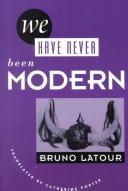
I want to say upfront this one’s an odd duck for me to be reviewing here, it’s Latour’s actual academic argument about science and society, not a novel, no plot, no characters, and I picked it up because a footnote in something else I was reading kept name-dropping it. So take the rating with the understanding that I’m grading this as a piece of writing and thinking, not against the usual thing I review.
The core idea, once it lands, is genuinely hard to unthink. Latour’s whole argument is that the modern era defines itself by rupture, post-Christian, post-industrial, post-structuralist, post-human, always naming itself by what it’s supposedly left behind rather than what it actually is, and that this habit of drawing a hard line between Nature (governed by law) and Society (governed by human freedom) has never actually held up to what people were doing in practice the entire time. We’ve always been mixing the two, hybrids everywhere, and the “modern constitution,” as he calls it, is just the story we tell ourselves to pretend we’re not doing that. Somebody put it as a two-sentence idea with staggering implications, and yeah, that’s about right, the whole book is really that idea getting turned over from a dozen angles.
Where it loses me, and where I think a decent chunk of readers land the same complaint, is that Latour writes like someone who’s convinced you already agree with him. It’s convoluted in stretches, there’s a real slump in the middle where it goes deep into philosophico-historical weeds before it comes back up for air in the anthropology section, which, credit where due, is the part that actually clicked hardest for me, probably because it’s the most concrete. One reader compared his handling of “Nature-Culture” to a Trojan Horse smuggled through the network so alien ideas could sneak past a Western audience’s guard, which is a memorably weird way to put it and not, I think, actually wrong.
I’ll also say, because it’s the loudest dissent in the small pile of reactions I found, that there’s a real one-star camp that thinks this whole project is obscurantist nonsense dressed up as rigor, the kind of critique that later got a full academic treatment from people like Sokal going after exactly this style of writing. I don’t think Latour’s arguing in bad faith, but I understand the frustration, there are paragraphs here that could have said their point in a third the words and chose not to.
Three stars feels right, not because the idea isn’t good, it’s genuinely good, but because the book makes you work harder for it than the idea requires, and by the fourth section I was skimming for the payoff rather than reading every sentence. Worth it if the “post-” prefix has ever annoyed you the way it apparently annoys Latour. A strange, sideways read for someone who mostly reviews books with spaceships in them, but I don’t regret it.