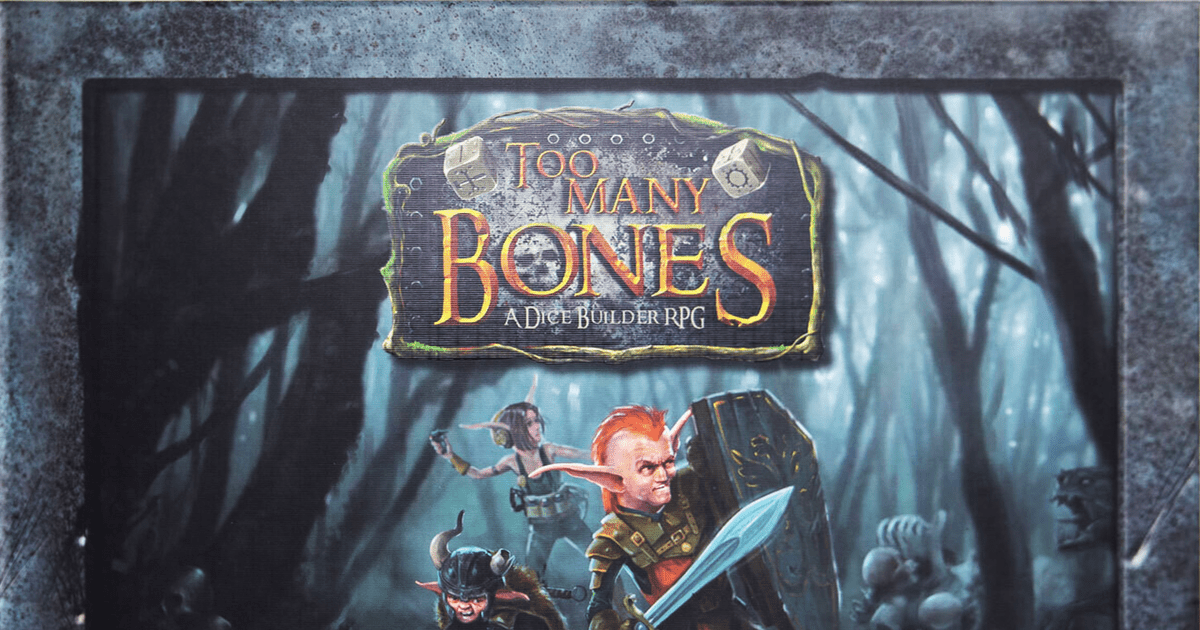
Let’s start with teachability because that’s genuinely the story of my first two sessions with this game: expect to spend a lot of your first play looking things up. The rulebook, gorgeous production aside, is genuinely under-explained in spots, and more than one person in my circle basically confirmed what I suspected, that you’re better off watching a tutorial video before you crack this open than trying to bootstrap it cold from the book alone. Once it clicks, it clicks, but that first climb is real, and it’s steeper than the box’s friendly chunky-dice aesthetic suggests.
The core loop, once you’re through that wall, is one of the better dice-chuckers I’ve played, and I say that as someone who’s generally suspicious of dice-forward design. You’re playing a Gearloc, a bizarre little creature with a totally unique skill set, working through a semi-randomized set of daily encounters before a big boss fight at the end, and the game’s bad-roll mitigation, banking bad rolls into “bones” you can spend later, is one of the smarter systems I’ve seen for taking the sting out of a cold streak without removing luck from the game entirely.
Setup and teardown is where this one loses real points from me, personally, because I track that closely and Too Many Bones is not a quick unpack. The component count is enormous once you own more than the base box, and getting everything sorted, sleeved or chip-bagged, laid out, and then packed away again afterward eats real time, enough that one player I follow flagged it as the single thing keeping them from playing more than they’d like to. There’s no great insert solution out of the box either, you’re mostly on your own working out a storage system that keeps forty custom dice and dozens of chips from turning into a shuffled mess between sessions, and that’s a real tax on a game this component-heavy.
Where opinion splits, and where I land somewhere in the criticism camp, is longevity. Once you’ve played enough Gearlocs and enough Tyrants, a real pattern of sameness sets in, similar encounters, similar bosses, and a strategy that leans hard on stacking attack dice tends to outperform the more interesting skill-dice builds, which some longtime players describe as a genuinely bad trend, the boring option out-competing the fun one. I noticed this myself around my sixth or seventh play, the daily encounter cards started feeling like set dressing on top of a spawn-kill-repeat loop rather than a story I was actually inside.
Four stars. This is a beautifully produced, genuinely inventive dice-builder that rewards a committed group willing to eat the setup cost and the learning curve, and it’s an excellent solo game specifically, quiet enough to run at your own pace without a table full of people waiting on you to look up a rule. Just don’t go in expecting a light night, and don’t expect the depth to hold at the same level forty plays in that it does on play six.